
Ultrasonic cleaners are widely used to remove dirt, grease, dust, and other contaminants from small and detailed items. Because the cleaning process can reach areas that are difficult to clean manually, many users wonder whether an ultrasonic cleaner can also disinfect the objects placed inside it.
The answer requires an important distinction. Ultrasonic cleaning and disinfection are not the same process. Ultrasonic waves can help remove microorganisms from surfaces, but ultrasonic cleaning by itself should not automatically be considered a validated disinfection method. If an item needs to be disinfected, an appropriate disinfectant, validated process, or additional disinfection technology may be required.

How Does Ultrasonic Cleaning Work?
An ultrasonic cleaner uses high frequency sound waves to create microscopic bubbles in a liquid. These bubbles rapidly form and collapse in a process known as cavitation.
The Cleaning Action of Cavitation
When cavitation bubbles collapse near an item's surface, they create localized mechanical action. This action helps loosen dirt and contaminants from small gaps, grooves, holes, and other difficult to reach areas.
This is one reason ultrasonic cleaning is commonly used for jewelry, eyewear, tools, precision components, and other small items with complex surfaces.
However, removing microorganisms from a surface does not necessarily mean that the microorganisms have been killed or inactivated.
Does Ultrasonic Cleaning Kill Bacteria and Viruses?
Ultrasonic cleaning can contribute to the removal of microorganisms, but cleaning alone should not be treated as equivalent to disinfection.
Cleaning vs. Disinfection
Cleaning primarily focuses on removing visible and microscopic soil, debris, oils, and contaminants. Disinfection, on the other hand, involves reducing or inactivating microorganisms to a specified level using an appropriate method.
The cavitation generated by an ultrasonic cleaner creates strong mechanical forces, which may affect microorganisms. However, the actual antimicrobial effect depends on many variables, including ultrasonic frequency, power, exposure time, temperature, liquid chemistry, microorganism type, and the condition of the item.
Therefore, users should not assume that simply placing an object in an ultrasonic cleaner makes it disinfected.
Can a Disinfecting Solution Be Used?
In some applications, an ultrasonic cleaner can be used with a compatible cleaning or disinfecting solution. The ultrasonic action can help the liquid reach recessed areas and complex surfaces.
Choose the Solution Carefully
Not every disinfectant is suitable for ultrasonic equipment or every type of material. Certain chemicals can damage metals, plastics, coatings, rubber components, gemstones, or other sensitive materials.
Before using a chemical solution, check both the ultrasonic cleaner manufacturer's instructions and the item's material compatibility requirements.
The disinfectant must also be used according to its own label directions, including the required concentration and contact time. Ultrasonic agitation does not automatically replace the contact time specified for a disinfectant.
Do Not Mix Cleaning Chemicals
Different chemical products should not be mixed unless the manufacturer specifically states that they are compatible. Mixing chemicals can create unexpected reactions and may damage equipment or create safety hazards.
For commercial applications, buyers should also consider whether the selected solution and cleaning process meet the applicable requirements for their industry.
What Items Can Benefit From Ultrasonic Cleaning?
Ultrasonic cleaners are particularly useful when an item has small grooves, joints, cavities, or other areas that are difficult to reach manually.
Jewelry
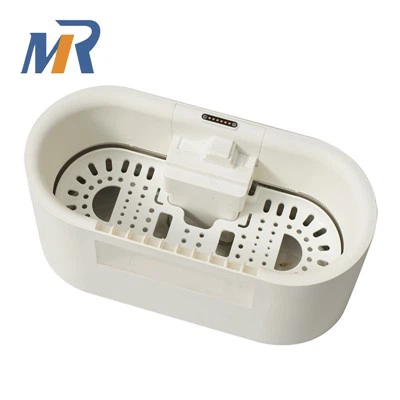
Jewelry can accumulate skin oils, dust, and other residues around settings and small components. A Mini Ultrasonic Cleaner can be convenient for suitable jewelry items.
However, not all jewelry should be placed in an ultrasonic cleaner. Certain gemstones, delicate settings, plated surfaces, and treated materials may require alternative cleaning methods.
Eyeglasses
An Eyeglasses Ultrasonic Cleaner can help remove fingerprints, oils, dust, and other surface contaminants from compatible glasses.
For eyewear that requires disinfection, users should follow the eyewear manufacturer's care instructions and use an appropriate disinfection method rather than assuming ultrasonic cleaning alone provides complete disinfection.
Small Tools and Components
Ultrasonic cleaning can also be useful for suitable metal tools, precision components, and other durable items. The cleaning solution and operating conditions should always be selected according to the material and application.
Can UV Light Add Disinfection Capability?
Some ultrasonic cleaning products combine ultrasonic cleaning with additional technologies.
Ultrasonic Cleaning With UV Light
A With UV Light Ultrasonic Cleaner combines ultrasonic cleaning with UV light as part of its design.
UV light can have antimicrobial effects when the microorganisms receive an adequate dose. However, UV effectiveness depends on factors such as wavelength, intensity, exposure time, and whether the microorganisms are directly exposed to the light.
Objects with shaded surfaces, deep cavities, or areas blocked from the UV source may not receive sufficient exposure. Therefore, UV functionality should be evaluated based on the actual equipment design and intended application.

Does Drying Help After Cleaning?
Drying is an important part of many cleaning workflows, particularly when moisture remaining on an item could create problems.
Why Proper Drying Matters
A With Dry Ultrasonic Cleaner can combine ultrasonic cleaning with a drying function. Removing residual moisture can make the handling process more convenient and help prevent water spots or moisture related issues.
However, drying should not be confused with disinfection. Simply drying an item does not necessarily eliminate microorganisms.
Important Factors When Using an Ultrasonic Cleaner for Disinfection
If disinfection is part of the intended application, several factors should be considered before selecting an ultrasonic cleaner.
Material Compatibility
Confirm that the item can safely tolerate ultrasonic cleaning, the selected temperature, and the cleaning solution.
Process Parameters
Ultrasonic frequency, power, temperature, cleaning time, and solution chemistry can all influence cleaning performance. Follow the equipment manufacturer's recommended operating conditions.
Validated Disinfection Requirements
If an item must meet a specific hygiene or disinfection standard, a validated disinfection process should be used. This is especially important in professional, medical, laboratory, food processing, and other regulated environments.
Item Design
Complex objects can contain areas that are difficult for both ultrasonic energy and disinfecting agents to reach. Proper positioning inside the tank is therefore important.
Choosing the Right Ultrasonic Cleaner
Different applications may require different equipment configurations.
A Portable Ultrasonic Cleaner can be useful when equipment needs to be moved between locations or used in smaller workspaces.
A Mini Ultrasonic Cleaner is suitable for smaller items and compact cleaning tasks.
For applications where drying is also required, a With Dry Ultrasonic Cleaner can provide an integrated cleaning and drying workflow.
For users interested in combining ultrasonic cleaning with UV technology, a With UV Light Ultrasonic Cleaner may provide an additional processing step, depending on the application and equipment specifications.
Final Answer
So, can an ultrasonic cleaner disinfect items? Not necessarily by ultrasonic cleaning alone.
Ultrasonic cleaning is highly effective for removing dirt, oils, and other contaminants, and the cavitation process can help remove microorganisms from surfaces. However, cleaning should not automatically be described as disinfection.
When disinfection is required, an appropriate disinfecting solution, UV treatment, heat process, or another validated method may be necessary. The exact approach depends on the item, material, microorganisms involved, and required level of microbial reduction.
For buyers selecting ultrasonic cleaning equipment, it is important to look beyond the ultrasonic function itself. Consider the tank size, ultrasonic frequency, power, temperature control, drying function, UV configuration, compatible solutions, and intended application.
If you are sourcing ultrasonic cleaners for household, commercial, laboratory, or other applications, we can help you compare different configurations and select equipment based on your cleaning and processing requirements.