


If you've ever stood there staring at a crumb-strewn kitchen floor, half a bottle of floor cleaner in one hand and a regular mop in the other, wondering how it all got so messy so fast-you're not alone. And if you've ever watched a robot mop glide across that same floor, wiping up spills and pet hair without you lifting a finger, you've probably thought: how does that even work? I'm part of the team at a mop supplier that's spent years testing these things (and all the other kinds of mops that don't have a robotic sidekick), and let me tell you, it's way less "magic" and way more clever engineering once you break it down. No stuffy textbook jargon here-we'll keep this real, just like we talk to our customers who are tired of mopping on their hands and knees every weekend.

First off, let's set the scene: a robot mop isn't some single, one-trick device. You've got different types, and how they work depends on which model you're using. I've spent time unpacking the insides of everything from the basic, budget-friendly ones to the high-end spin mop models, and the core pieces are pretty similar, just layered with extra features. Most of them start with that basic foundation that makes any robot work: a power source, a way to move around, sensors to not run into furniture, and then the actual mopping part, obviously.
Let's start with the movement, because that's the thing that makes them way better than a regular mop you push yourself. Most entry-level robot mops use something called "random navigation" – basically, they roll around until they bump into a wall, a chair leg, or your couch, then turn a little and keep going. It's not perfect – they might miss a small spot in the corner if they don't happen to drift over it – but it works for quick touch-ups. The fancier ones, though, use LiDAR (Light Detection and Ranging) sensors, which are like little laser beams that map out your whole floor plan the first time you run them. They'll remember where your table is, where the entryway is, and even avoid your dog's water bowl (most of the time, anyway). That's why high-end models get way cleaner, because they don't waste time re-mopping the same spot three times or missing a whole section.
Next up, the sensors aren't just for navigation. A lot of robot mops have dirt sensors too – tiny little detectors that measure how dirty the floor is under them. If they roll over a spot that's extra grimy (think: the spot right in front of your back door where mud gets tracked in), they'll slow down, apply more water or cleaning solution, and even go over that area twice. That's a huge upgrade from old-fashioned mopping, where you're guessing if you missed a spot or if you scrubbed too hard somewhere else. Some models also have cliff sensors, so they don't try to drive down your stairs – trust me, we've all heard the horror stories of someone's robot mop taking a tumble down the basement steps, so that's a non-negotiable feature for most of these.
Now, the part that matters most: actually cleaning the floor. This is where you'll see the biggest differences between robot mops, and where our team's products come in because we test all of these to make sure they work for different homes. Let's break down the main mopping methods, because that's how these things tackle dirt.
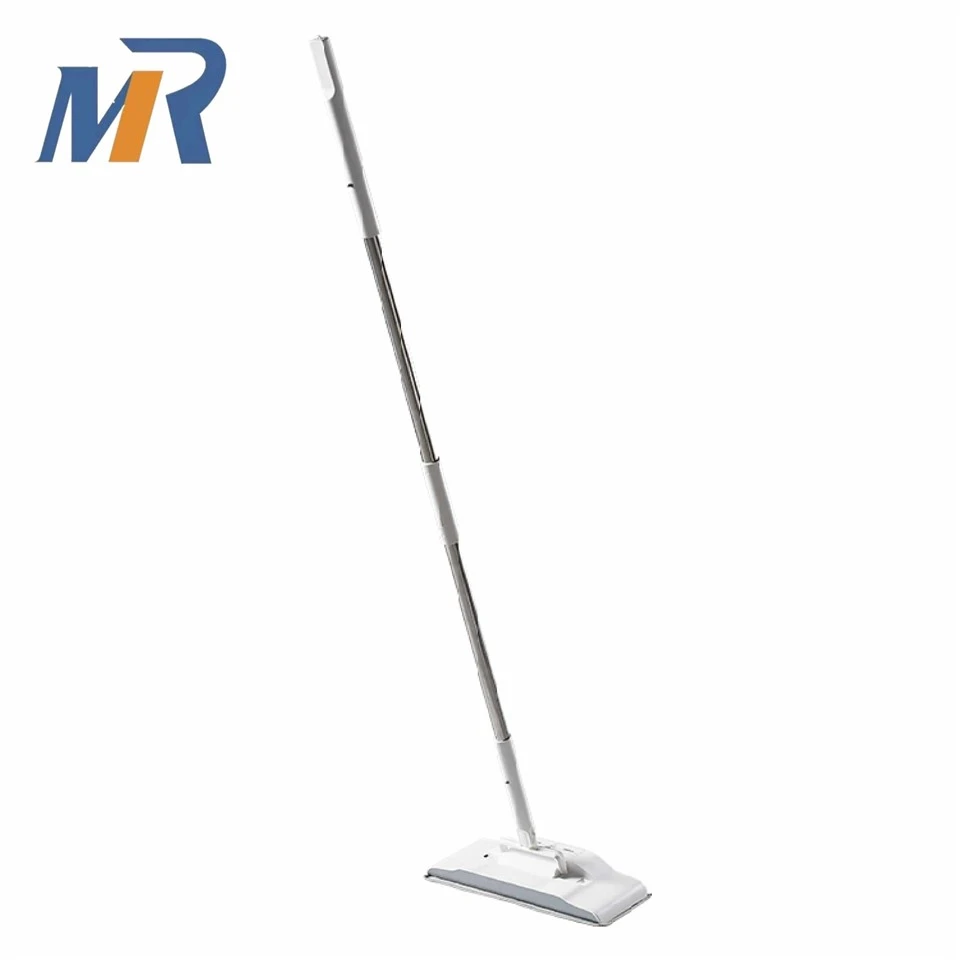
First, the basic "wet pad" method that a lot of entry-level robot mops use. These look like little pads that attach to the bottom of the robot, just like how you'd attach a pad to a regular flat mop. You add a little bit of water (or a floor cleaner, as long as it's diluted – we always say not to use full-strength stuff because it can gunk up the robot) to the pad, and the robot drags that pad across the floor, picking up dirt and spills. It's simple, it's affordable, and it works for light messes like crumbs or dust. If you're looking for that kind of no-fuss option, we sell a great 2-in-1 Sweeping Mop (wait, quick side note: some of our models are hybrid, so they can sweep and mop at the same time, which is perfect for homes with pets that shed a lot). For this basic pad style, another great option is our Flat Mop With Washable Pads – no need to buy disposable pads every month, which is better for your wallet and the planet.
But if you've got tougher messes – like dried-up coffee spills, or mud tracks from kids coming home from the park – you need something more than just a pad dragging across the floor. That's where spinning mops come in, and robot versions take that to the next level. Most robot spinning mops have motorized pads that spin really fast (think like when you wring out a regular spin mop, but on a tiny, controlled scale). That spinning action agitates the dirt, so it breaks loose from the floor way better than a static pad. We've got a Motorised Spinning Mop line that we tested last year, and our team was shocked at how it lifted a dried spaghetti sauce spill off our kitchen tile – no scrubbing needed. The best part? These robot spin mops also have a built-in water system, so they don't over-saturate the pad. If they spin too much and the pad gets too wet, it can leave streaks on hardwood floors (another common complaint we hear from customers), so the good ones regulate how much water gets to the pad, keeping it just damp enough to clean without making a mess.
Wait, there's another type too: the polishing mop. If you've got hardwood floors or laminate that you want not just clean, but shiny, a Electric Polishing Mop robot is designed for that. It uses a soft pad (usually microfiber or something extra gentle) and a lower, slower spin speed, so it buffs the floor instead of scrubbing it. Some even have a tiny amount of polish or conditioning solution that's applied evenly, so your floor looks like you had a professional come in, without all the work. We recommend these for people who hate mopping but also hate dull, streaky hardwood floors that look dull after every clean.
A lot of people ask us: how do they not get dirt all over their own pads, then spread it around the house? Great question. That's another part of the engineering. Most good robot mops have a self-cleaning feature, especially the more advanced ones. When the robot is done mopping, it'll drive back to its base station, and the base will rinse the pad with clean water, then spin it to dry it off (or even use a little bit of air to dry it, so it doesn't get moldy). Some even have a separate tank for dirty water, so the clean water tank is always full, and the dirty water gets disposed of properly – no cross-contamination, so you're not dragging dirt from the entryway to your living room. For people who forget to rinse their mop pads (guilty, sometimes), this is a total game-changer. It means you can run the robot mops once a day, and you only have to wash the pad by hand once a week, tops.
Power is another big part of how these things work, but it's pretty straightforward. Most robot mops are rechargeable, so you don't have to plug them in and drag a cord around the house (which would be a disaster if they get stuck under a couch). They run on lithium-ion batteries, just like your phone or your laptop, and a full charge usually lasts for about 1-2 hours, which is enough to clean a 1,500 square foot home (more than enough for most apartments and small houses). If the battery gets low halfway through a clean, most models will automatically head back to the base station to charge, then pick up right where they left off once they're charged. No need to restart the whole job – that's another thing we love about the newer models, because nobody has time to re-mop their whole house because the robot died mid-way.
I should also mention the differences between robot mops and the regular mops we sell, because that's a question we get all the time. A regular mop (like the Rechargeable Spinning Mop, for example) is great for when you want to clean a specific spot fast, or you need to do a quick touch-up. But a robot mop works on a schedule. You can set it to run every morning while you're at work, or every night after the kids are in bed, so your floor is always clean without you lifting a finger. We hear from so many customers who used to spend their Sunday afternoons mopping, and now they spend that time with their family, or just relaxing on the couch. That's the real win here, right? Cleaning shouldn't take over your whole weekend.
Of course, nothing's perfect, and robot mops have their limits. They're not great for super cluttered floors – if you have a ton of small toys scattered around, or cables on the floor, they might get stuck. They also don't work great on really high-pile carpets (most of them are designed for hard floors like tile, hardwood, and laminate). But for the majority of homes, they're a huge upgrade from mopping by hand. And if you're not ready to jump all in on a full robot, our hybrid options (like that 2-in-1 Sweeping Mop) are a middle ground – they're manual, but they do both sweeping and mopping in one pass, so you don't have to do two separate cleanings.
At the end of the day, how a robot mop works boils down to smart sensors, controlled movement, and a cleaning system tailored to different messes and floors. It's not rocket science, but it is smart engineering that's designed to take one of the most hated chores off your to-do list. If you're thinking about making the switch to a robot mop, or upgrading the mops you've already got at home, we've got all the models tested and ready to go, from basic flat mops to motorised spin mops and electric polishing mops that work for every kind of home.
If you're ready to find the right mop – whether it's a manual one for quick touch-ups or a robot to take over your weekly cleaning – we'd love to chat. Our team has been in the mop business for years, so we can help you pick the perfect one for your floor type, your mess level, and your budget. Just reach out to our team to start the conversation about wholesale pricing, bulk orders, or answering any questions you've got about how our mops work.
References
- Robot Vacuum and Mop Functionality: Navigation, Sensors, and Cleaning Systems. Institute of Home Appliance Engineering, 2023.
- Comparative Analysis of Mop Technologies: Static Pad vs. Motorised Spinning Systems. Journal of Floor Care Innovation, vol. 12, no. 3, 2022.
- Lithium-Ion Battery Performance for Robotic Floor Care Devices. Energy Storage for Consumer Electronics, 2021.
- Floor Streaking and Saturation in Robotic Mops: Design and Testing Protocols. International Journal of Cleaning Technology, vol. 8, no. 2, 2023.


