


Measuring the cleaning efficiency of a floor sweeper involves far more than calculating how many square feet it covers in an hour. True cleaning efficiency combines debris pickup rate across different particle sizes, battery or mechanical consistency, edge-to-edge coverage, dust containment, and the time required to empty and maintain the machine. Whether you manage a busy retail storefront, oversee warehouse maintenance, or want faster daily cleanup at home, understanding these engineering benchmarks helps you select equipment that finishes the job in one pass rather than pushing dirt around.
Drawing from over 15 years of precision mold manufacturing and high-volume production experience-including delivering hundreds of thousands of handheld and cordless sweepers to global markets across North America, Europe, Japan, and South Korea-our engineering team evaluates sweeper performance using measurable, real-world metrics rather than inflated laboratory numbers.
Core Metrics That Define Floor Sweeper Efficiency
When evaluating any sweeping machine, four technical indicators determine how effectively it removes dirt in real operating environments:
- Debris Pickup Rate Across Particle Sizes: A high-efficiency sweeper captures fine dust (under 100 microns), medium grit like sand and coffee grounds, and bulky debris such as cereal, dry leaves, or packaging scraps in a single forward pass. Low-grade units often scatter large debris forward while leaving a trail of fine powder behind.
- Area Coverage Per Hour (Theoretical vs. Practical): Practical coverage accounts for turning around furniture, emptying the dustbin, and overlapping passes. While a manual push unit averages 1,500 to 2,500 square feet per hour in open spaces, powered cordless and walk-behind units routinely achieve 4,000 to over 15,000 square feet per hour.
- Dust Containment and Filtration: Efficiency drops sharply if airborne dust escapes back into the room. Modern electric sweepers pair sealed airflow channels with multi-stage or HEPA filtration so captured allergens stay locked inside the hopper rather than settling back onto shelves and desks.
- Hopper Capacity and Emptying Speed: A machine with a tiny dustbin forces operators to stop every five minutes. High-efficiency designs balance compact maneuverability with high-capacity, quick-release debris containers that empty cleanly without tools.
Comparing Efficiency by Floor Sweeper Type
Different environments demand distinct mechanical architectures. Selecting the wrong category is the primary reason buyers experience poor cleaning results.
| Sweeper Category | Best Operating Environment | Practical Coverage Rate | Primary Efficiency Advantage | Key Limitation |
| Manual Mechanical Sweeper | Small apartments, break rooms, quick spot cleans | 1,500 – 2,500 sq ft/hr | Zero charging time, ultra-quiet operation, lightweight | Relies on wheel traction; struggles on ultra-smooth wet floors |
| Cordless Electric Sweeper | Homes with pets, offices, cafes, classrooms | 3,500 – 6,000 sq ft/hr | Motorized brush agitation, strong suction assist, agile under furniture | Limited by battery runtime (typically 30 to 60 minutes) |
| Walk-Behind Commercial Sweeper | Warehouses, retail aisles, school corridors, garages | 10,000 – 20,000+ sq ft/hr | Wide sweeping path, dual side brushes, large-capacity debris hopper | Too bulky for tight residential bathrooms or narrow corners |
Manual Mechanical Sweepers
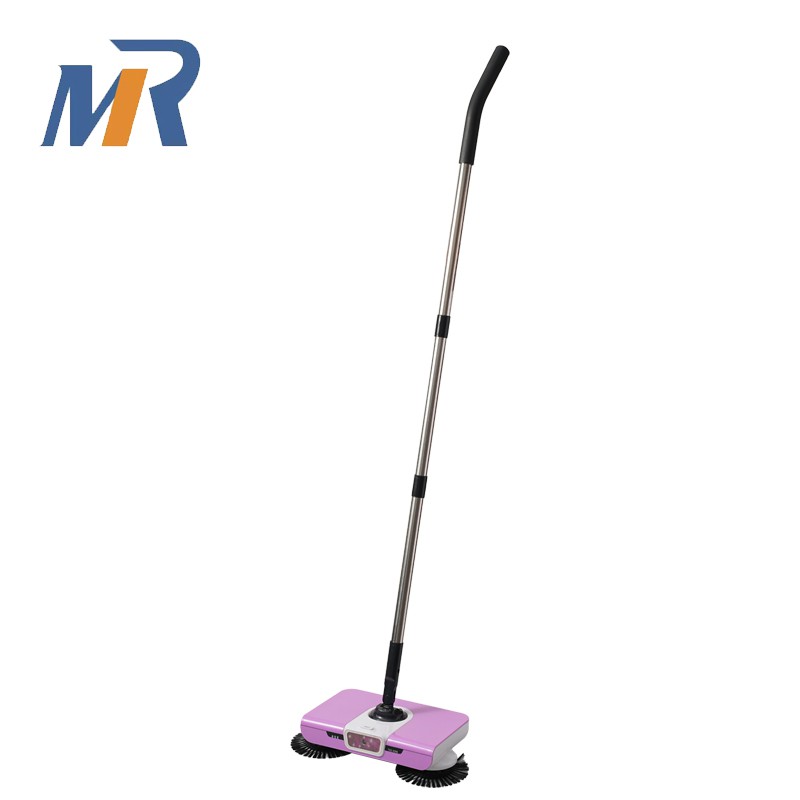
Manual units rely on gear-driven or belt-driven rotary brushes powered by the motion of the wheels. On low-pile commercial carpet or textured tile, they deliver surprisingly high efficiency for dry crumbs and pet hair without cords or battery degradation. However, on glossy polished concrete or wet kitchen floors, wheel slip can reduce brush rotation speed.
Cordless Electric Sweepers
Powered by high-torque lithium-ion battery packs, a modern floor sweeper drives its main roller brush independently of walking speed. This consistent RPM allows it to lift fine silt, hair, and heavy crumbs effortlessly across hardwood, tile, and short carpets. Slim, low-profile housings also allow operators to clean underneath sofas, retail display racks, and office desks without moving furniture.
Walk-Behind Sweepers
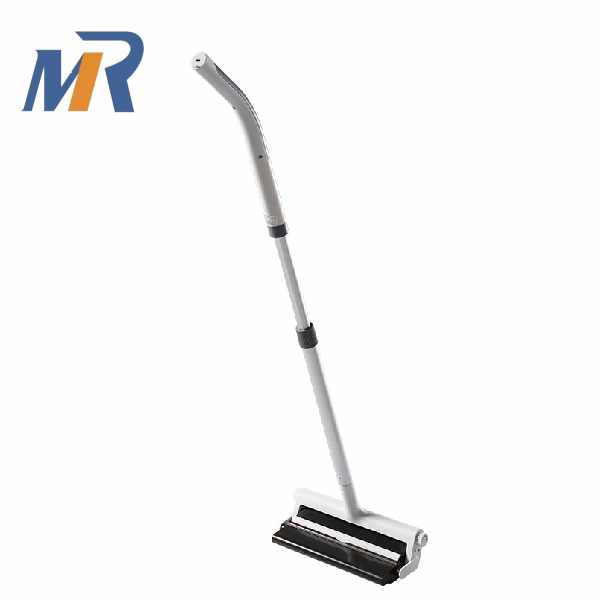
Engineered for large commercial footprints, walk-behind machines feature wide main cylindrical brushes paired with spinning side brooms that pull dirt away from baseboards and pallet edges. Facility managers switching from manual brooms to walk-behind units routinely cut nightly floor maintenance labor hours by 50% to 65%.
Engineering Factors Behind High-Efficiency Sweeping
Two machines with similar exterior dimensions can perform very differently depending on internal component tolerances and structural design:
- Brush Bristle Geometry and Density: Chevron-patterned (V-shaped) bristle rows funnel debris toward the center of the intake rather than pushing it outward. Combining stiff nylon bristles for heavy grit with softer synthetic fibers for fine dust maximizes single-pass pickup.
- Precision Molded Housings and Air Seals: Tight injection-molded tolerances around the brush chamber create a controlled air tunnel. When housing gaps are properly sealed, brush rotation generates natural air lift that pulls lightweight dust and pet fur straight into the collection bin.
- Anti-Tangle Roller Architecture: Long human hair and pet fur wrap tightly around standard narrow axles, increasing motor drag and draining battery life. Larger-diameter rollers with recessed end bearings prevent hair from reaching the drive shaft.
- Edge-Cleaning Side Brushes: Up to 30% of indoor dirt accumulates along walls and cabinet toe-kicks. Angled side sweepers extend beyond the main chassis width to sweep edge debris directly into the path of the primary roller.
Real-World Performance vs. Laboratory Ratings
Manufacturers frequently advertise laboratory pickup ratings of 95% or higher. Those tests are conducted on flat, unobstructed test boards using uniform synthetic test dust. In real homes and commercial facilities, floor transitions, rug edges, table legs, and humid air all affect performance.
To evaluate true real-world efficiency, look at maneuverability and weight distribution. A lightweight cordless unit with a 180-degree swivel neck cleans a furnished living room or cluttered café faster than a heavier, higher-wattage machine that requires constant lifting and repositioning. Similarly, battery voltage stability matters: well-engineered lithium battery management systems maintain full brush speed until the final minute of charge rather than gradually slowing down.
How to Maintain Peak Sweeping Efficiency Over Time
Even the highest-rated commercial or household sweeper can lose 30% to 40% of its pickup efficiency within six months if basic maintenance is neglected. Follow these four habits to keep performance consistent:
- Empty the Dustbin Before Reaching the Max Line: Overfilled hoppers block internal airflow and allow debris to fall back onto the floor when the machine tilts.
- Clear Wrapped Hair Weekly: Use a small blade or cleaning comb to slice and remove hair wrapped around the main roller brush and side broom hubs so the motor runs cool and draws minimal current.
- Tap or Rinse Filters Regularly: Clogged exhaust filters choke airflow on electric sweepers. Tap out fine dust after every few uses, and wash washable filter elements completely dry before reinstalling.
- Inspect Bristle Wear Every Quarter: Once bristles fray outward or shorten by more than a quarter of their original length, they lose contact pressure with grout lines and floor textures. Replacing worn brush rollers restores factory-level pickup immediately.
Frequently Asked Questions
Can a floor sweeper replace a traditional vacuum cleaner?
For daily maintenance on hard floors and low-pile rugs, a high-efficiency cordless sweeper is faster, quieter, and more convenient than dragging out a full-size vacuum. However, for deep-pile carpets or upholstery, a high-suction canister or upright vacuum remains necessary to extract deeply embedded allergens.
Do floor sweepers work effectively on pet hair?
Yes, provided the unit uses rubberized blades or anti-tangle bristle rollers with accessible end caps. Sweeping pet hair daily prevents fur from matting into rug fibers and keeps household air cleaner without running a loud vacuum.
What floor surfaces are best suited for a floor sweeper?
Floor sweepers achieve maximum efficiency on sealed hardwood, laminate, vinyl plank, porcelain tile, polished concrete, and commercial low-pile carpet tiles.


